Best Acoustic Treatment for a Home Studio in a Small Room UK
Recording or mixing in a small bedroom or home office presents a genuine acoustic challenge. Reflective surfaces bounce sound around a confined space, creating muddy bass, flutter echoes, and inconsistent frequency response that makes critical listening nearly impossible. The good news: you don't need a dedicated vocal booth or full 4m² treatment suite to achieve usable recordings. Strategic acoustic treatment designed for tight spaces works, if you know what to prioritise.
Why Small Rooms Need Different Acoustic Treatment
Small rooms cause two distinct problems. First, low frequencies (bass) become trapped and exaggerated. A room under 4m³ has modal resonances—standing waves that peak at certain frequencies, creating boomy, uncontrollable bass. Second, early reflections from nearby walls smear vocals and instruments. Because sound has less distance to travel before bouncing back to the microphone, these reflections arrive within milliseconds, colouring the recording.
Traditional studio design addresses this with 15-30cm thick bass traps in corners and full-wall panel coverage. That's impractical in a 2m × 2.5m bedroom. You're working with constraints, so treatment needs to be efficient and targeted.
Absorption Panels: The Core Strategy
Acoustic foam or rigid fiberglass panels absorb mid and high frequencies where reflections hurt most. A 5cm panel absorbs meaningfully above 250Hz; thicker 10cm panels extend performance lower. For small rooms, panel placement matters more than quantity.
Position panels opposite your listening or recording position—typically 60cm above seated ear height on the wall behind monitors, and symmetrically on the side walls. This breaks the flutter echo (the ringing that travels between parallel walls) without requiring comprehensive coverage. Most small home studios benefit from four to eight panels, not thirty.
Fabric-wrapped fiberglass panels (sold as "rockwool boards" in the UK) work as well as branded acoustic panels and cost roughly half as much. A 1200 × 600mm × 50mm board absorbs reliably and blends with interior design better than bright blue foam. Expect to pay £30-60 per panel depending on supplier and finish.
Bass Traps: Necessary But Targeted
Bass doesn't need to hit you like a boxing glove every time you mix a kick drum. Conventional wisdom says "treat corners"—bass traps in room corners address the worst modal issues. A corner bass trap needn't be massive: even a 30cm × 30cm × 50cm foam wedge or rockwool-filled wooden frame in the corner opposite your mix position reduces the boominess.
For rooms where floor space is precious, corner traps using rigid board material (rockwool wrapped in fabric and mounted diagonally across corners) take less room than foam pyramids. Expect noticeable bass control from around £100-200 in corner treatment.
Don't over-treat bass. Absorb too much low end and your mixes will feel thin when played elsewhere. A small room usually needs corner coverage, maybe one additional bass trap behind monitors—not walls of bass absorption.
Diffusers: When Space Is Really Tight
If wall coverage is impossible (rented flat, living space you can't modify permanently), diffusers scatter reflections rather than absorb them. A diffuser breaks up mirror images, reducing reflections without killing the room's acoustic character. Commercial diffusers are expensive (£200+), and effectiveness depends on size and frequency range.
For small rooms, diffusers work best as secondary treatment—panels handle the main reflections, diffusers address what's left. In a 2m × 2.5m space, two decent diffusers plus corner treatment can produce workable acoustics without covering every surface.
Reflection Filters: A Practical Alternative
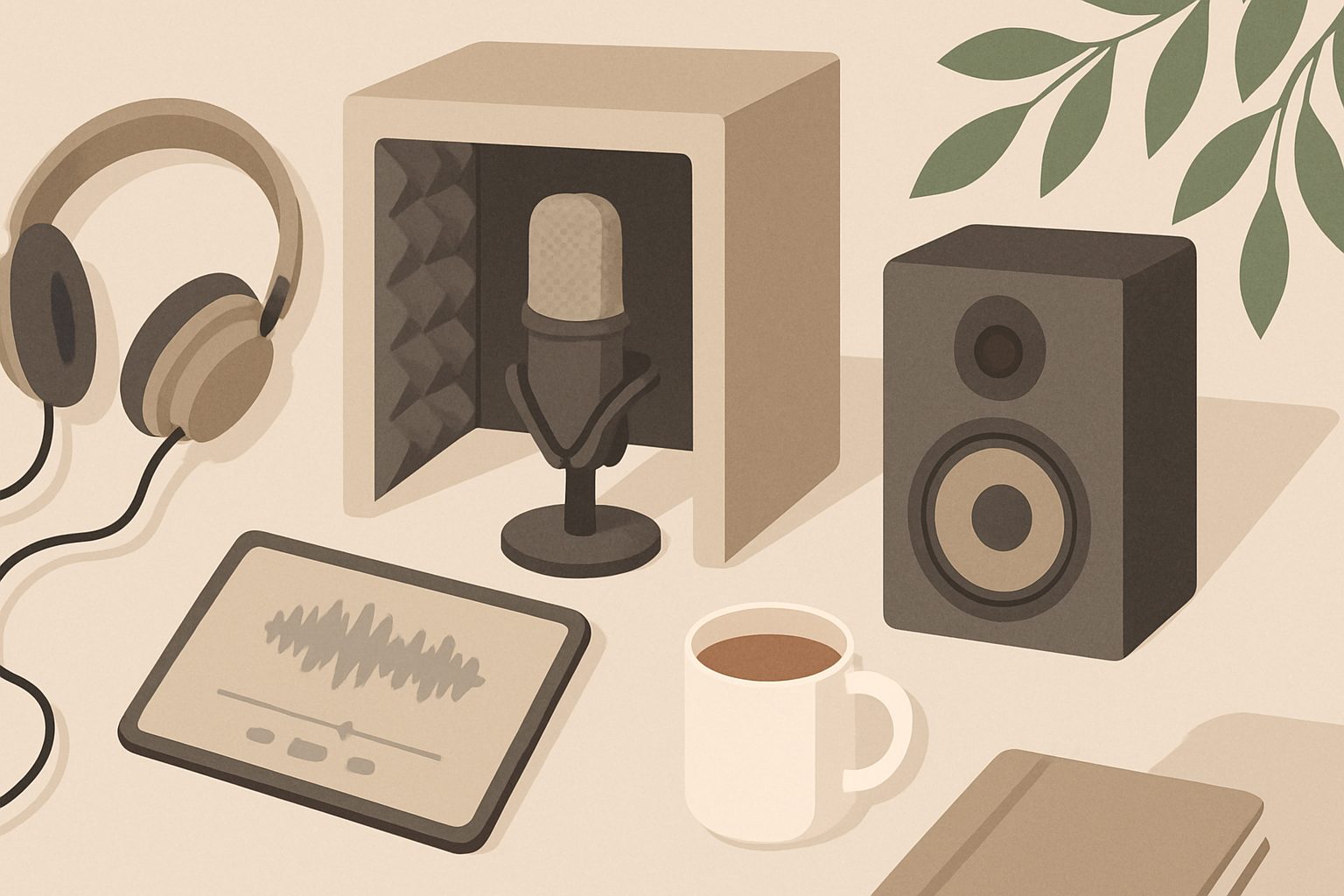
A reflection filter—a portable shield that mounts behind a microphone—isolates the vocal or instrument from room reflections. Brands like Neumann and Aston make professional versions (£200-500). Cheaper alternatives exist but offer less isolation.
A reflection filter doesn't solve room acoustics broadly; it protects the microphone from the worst reflections. For voiceovers, podcasts, or vocals, a reflection filter plus minimal room treatment (two side panels, corner bass traps) often produces cleaner recordings than larger panel installations alone. The trade-off: you're hiding from the room rather than fixing it.
Mini Sound Booths: When Space Allows
If you have a cupboard, wardrobe, or 1m × 1m corner, a portable mini booth (sometimes called "vocal booths" or "iso booths") offers the fastest acoustic improvement. UK suppliers sell collapsible booths in canvas or foam; they're designed to reduce room reflections and external noise.
A mini booth works because it combines absorption, isolation, and proximity—the microphone sits very close to treated surfaces, minimizing reflections. They cost £150-400 depending on size and material quality. For heavily treated isolation, they're excellent; for general room acoustics, they're a supplement, not a replacement.
Practical Setup for a Small Room
A realistic, effective setup for a 12m² bedroom:
- Four to six absorption panels (side walls, front wall)
- Two corner bass traps (opposite corners)
- Optional reflection filter (if recording vocals frequently)
- Acoustic material under the door (underlay or foam weatherstripping) to reduce external noise
This costs roughly £300-500 and delivers genuinely usable acoustics without commercial booth expense or permanent installation. Add a mini booth later if you need extra isolation for vocals.
Final Considerations
Don't treat acoustic problems by guessing. Before purchasing, listen carefully in your room. Where does it sound boomy? Where are reflections most obvious? Treat those specific issues rather than covering walls uniformly. Many small rooms need only 40-50% coverage to sound acceptable.
The room isn't perfect—accept that. Small rooms have inherent acoustic limitations. Your goal is workable recordings and mixes that translate reasonably to other listening spaces, not a flat frequency response that exists only in theory.
More options
- Portable Vocal Isolation Tents & Pop-Up Recording Booths (Amazon UK)
- Microphone Reflection Filters & Desktop Isolation Shields (Amazon UK)
- Acoustic Foam Panels & Bass Traps for Home Studios (Amazon UK)
- Freestanding Acoustic Office Pods & Soundproof Cabins (Amazon UK)
- Mass Loaded Vinyl & Soundproofing Barriers (Amazon UK)