Best Vocal Reflection Filters & Mini Booths for Small UK Flats
Vocal recording in a flat presents one core problem: hard surfaces bounce sound around, creating hollow reverb and picking up every echo from the room behind you. A full soundproof booth isn't an option when you're renting or space is tight, but a reflection filter or mini booth can genuinely improve recording quality without requiring a spare room or major installation.
The reality, though, is that no small device stops sound from leaving your space or entering it—they control what the microphone hears during recording. Understanding this distinction changes how you approach the problem and which solution actually works for your setup.
Why Reflection Filters Matter in Flats
When you record vocals in an untreated room, sound bounces off walls, ceilings, and floors before reaching the microphone milliseconds after the direct signal. Your DAW captures both—the voice you wanted and a blurred reverb tail. This is most noticeable on sibilants ('s' sounds) and plosives ('p', 'b' sounds), which become harsh and echo-y.
A reflection filter—whether a half-moon shield or a mini booth—reduces the volume of these reflections by absorbing sound energy or directing it away from the microphone capsule. This is different from soundproofing, which stops sound escaping the room entirely (and costs thousands in flat conversion).
For flat dwellers, this distinction matters because your neighbours won't hear much difference, but your recordings will sound noticeably cleaner.
Desk-Mount Reflection Shields
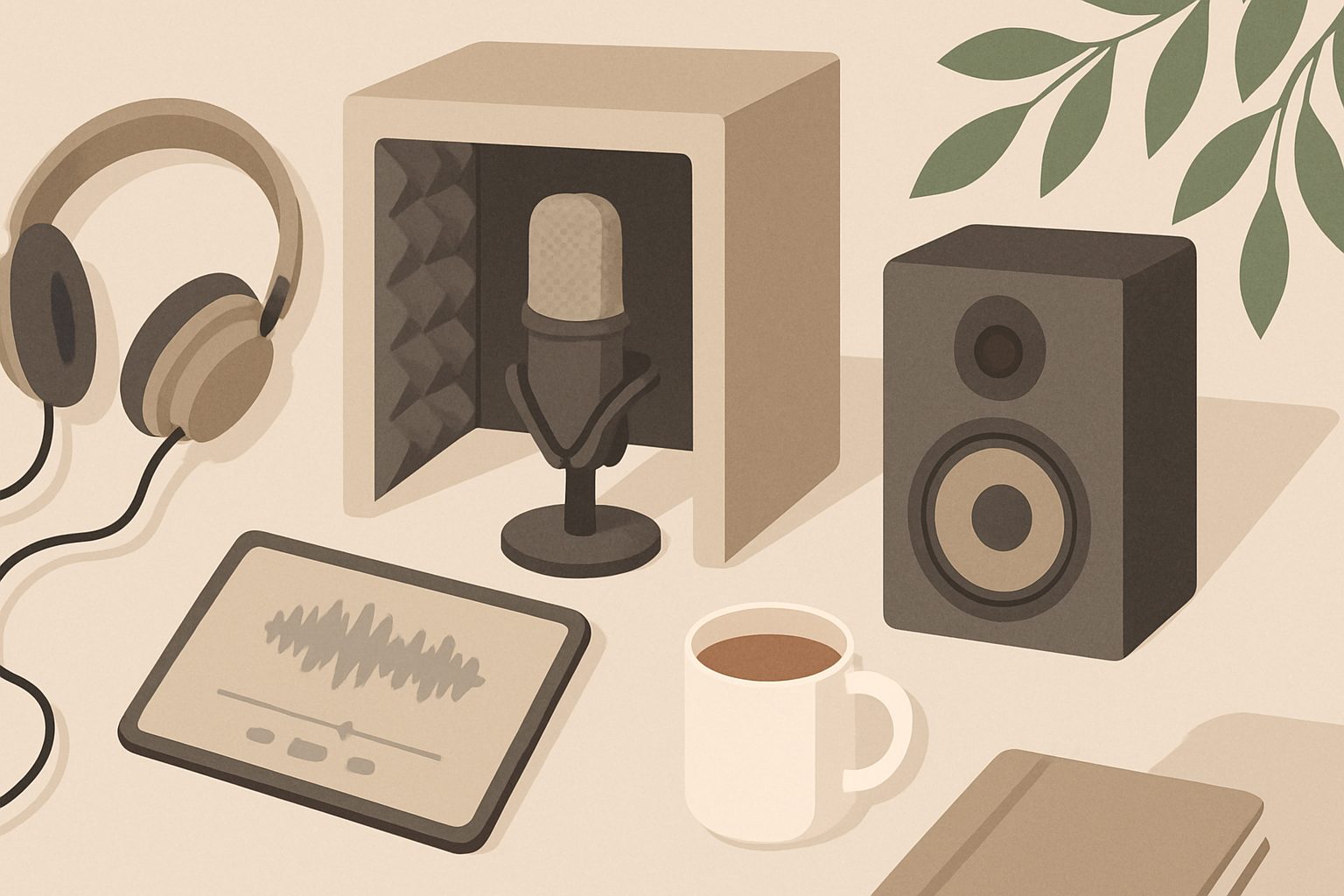
The most common solution is a semi-circular acoustic panel that mounts behind or around a desktop microphone. These typically cost £40–£150 and take up roughly 30×30 cm of desk space.
How they work: Sound bouncing off the wall behind your mic gets absorbed or deflected sideways instead of back into the diaphragm. The open front lets you position your mouth at the optimal distance without the shield blocking your view of a screen.
Real limitations: Shields only address reflections from behind. Side and floor reflections still reach the mic. In a small flat with hard walls close by, this is genuinely limiting—you'll still hear some room tone. They also don't isolate you from keyboard clicks, traffic outside, or housemates moving around.
Best for: Spoken word, podcasts, voiceovers, and singers who are otherwise recording in treated rooms. If your main issue is the wall 30 cm behind your mic, these work well. If your problem is the entire flat sounding cheap, a shield alone won't fix it.
Popular options include the SE Electronics Reflexion Filter and cheaper clones from brands like Neewer. The branded versions have thicker foam and better build quality, but even budget shields improve sibilance noticeably if you're recording in a moderately reflective room.
Mini Arched Tents & Booths
Portable mini booths—small arched tents that sit on your desk or floor—enclose two or three sides. Prices range from £80 to £400+ depending on construction and size.
The advantage: More surface area absorbs reflections. You get isolation from sides as well as behind. Some models are tall enough to create a partial vocal booth effect if you position yourself inside.
The catch: They can feel claustrophobic, and some have significant acoustic flutter (resonance at certain frequencies) because of their small, rigid shape. Cheaper versions use thin foam that doesn't absorb low frequencies, so you'll still hear boom from the bass end of the room. Assembly and breakdown also take longer than hanging a shield on a stand.
Real-world use: Better than a shield for recording in genuinely difficult rooms, especially if you're close to hard surfaces on multiple sides. The trade-off is convenience and workspace.
Brands worth considering are Neewer, Sennheiser, and Gator—they offer progressively better internal damping as you move up the price bracket.
Corner Wedge Solutions
A less obvious option is using corner-placed bass traps—rigid or soft-foam wedges designed to sit in room corners and absorb low-frequency reflections. These don't directly isolate your mic, but they reduce the boominess of the overall room.
Why this works for flats: Corner bass traps address the specific acoustic problem flats have—tight proximity to walls amplifies bass resonance. A vocal recorded in a boomy room sounds muddy no matter what's in front of your mic. Adding one or two corner treatments often improves mixes more than a fancy reflection filter.
Cost and space: £50–£200 per corner, and they're visible. Not ideal if you're renting and can't modify the space, but acoustic foam wedges are removable and sit flat against the corner without needing mounting hardware.
Practical Setup for Flat Recording
The honest approach: combine a modest shield or mini tent with room treatment elsewhere. A reflection filter handles the direct acoustic problem—preventing reverb from the wall immediately behind your mic. But it doesn't make the room sound professional on its own.
If you have £150 to spend, split it. Buy a basic shield (£50–£80) and add movable foam panels or a heavy curtain to one parallel wall. The curtain damps reflections that the shield doesn't catch. This combination addresses the core issue—untreated room reflections—without costing hundreds or requiring installation.
Microphone Choice Matters Too
A cardioid microphone naturally rejects sound from the rear more than an omnidirectional one. If you're shopping for both a filter and a mic, a decent cardioid condenser (such as a Rode NT1 or Audio-Technica AT2020) is often a better investment than pairing a cheap omnidirectional mic with an expensive booth. The microphone picks up the room first; the filter is secondary.
Budget Reality Check
Flats have acoustic problems money alone can't fix—you're limited by proximity to neighbours and the structure of the building. A £300 mini booth in a very reflective flat won't sound like a £3,000 vocal booth in a treated studio. What it will do is remove the worst artefacts: harsh sibilance, metallic plosives, and obvious room flutter.
For under £200, expect a noticeable improvement on vocals, especially on plosive-heavy consonants and sibilants. Beyond that, returns diminish unless you're also treating the room itself with absorption panels and bass traps.
Start with a basic shield and work from there. If it solves your problem, you're done. If not, you've learned what the room's real issues are, and that tells you whether you need more area absorption, bass treatment, or a different recording position entirely.
More options
- Portable Vocal Isolation Tents & Pop-Up Recording Booths (Amazon UK)
- Microphone Reflection Filters & Desktop Isolation Shields (Amazon UK)
- Acoustic Foam Panels & Bass Traps for Home Studios (Amazon UK)
- Freestanding Acoustic Office Pods & Soundproof Cabins (Amazon UK)
- Mass Loaded Vinyl & Soundproofing Barriers (Amazon UK)