Home Recording Booths UK: The Complete Beginner's Guide (2025)
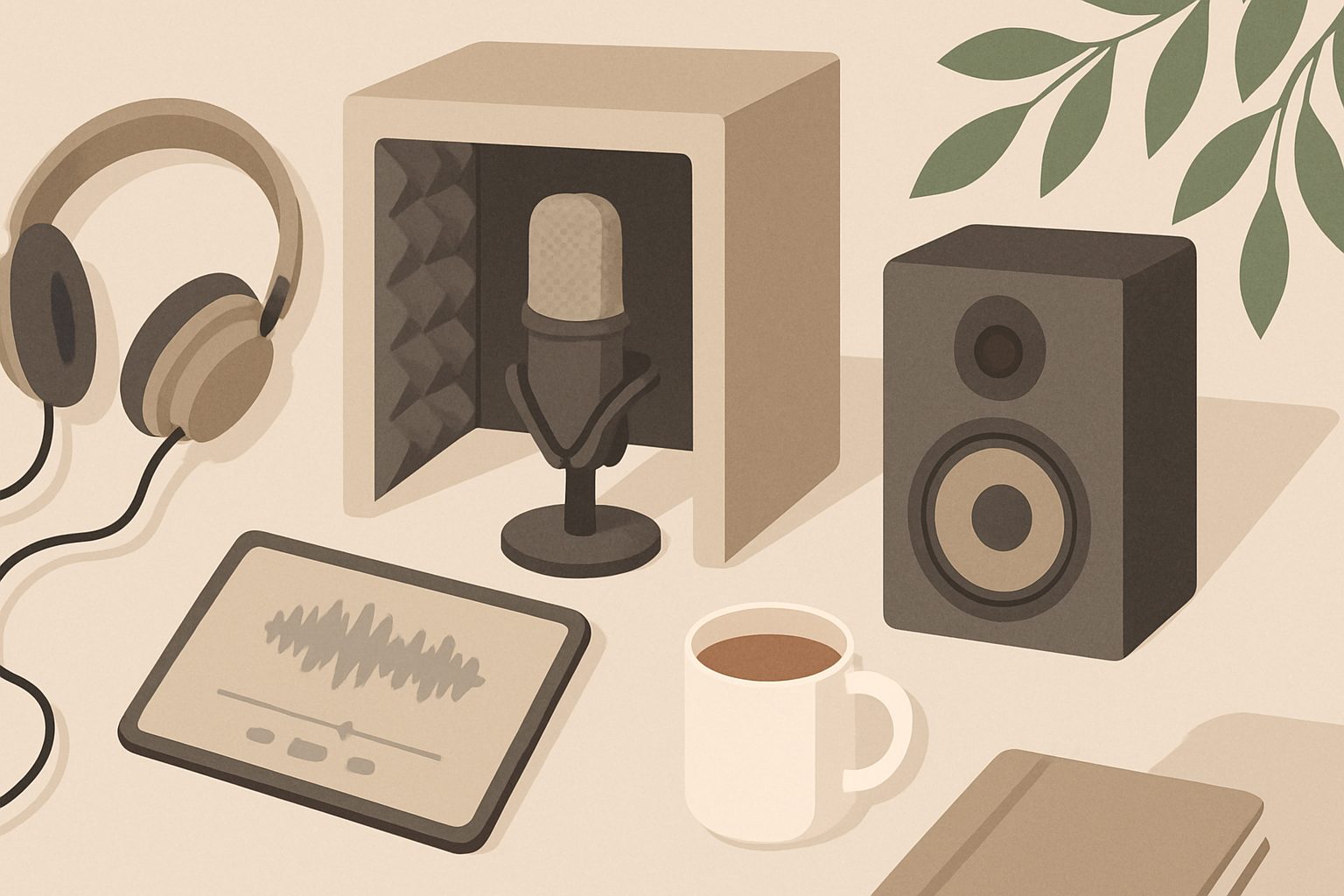
A home recording booth is a dedicated space designed to capture clean audio with minimal external noise and reflections. Whether you're podcasting, recording voiceovers, creating music, or streaming, a quality recording booth controls your acoustic environment—something you can't do in a bedroom or living room surrounded by hard surfaces and street noise.
Unlike a full studio (which is a treated room), a recording booth is typically a self-contained unit. It can sit in a corner, a spare room, or even under a desk. The walls absorb sound, preventing echoes and reducing noise from outside. This matters because professional-quality audio requires controlling what your microphone hears.
Types of Recording Booths
Portable vocal booths are lightweight panels you position around a microphone. They're affordable (£50–£300), easy to move, and perfect if you rent or have limited space. They won't block traffic noise from outside, but they reduce reflections off walls and minimise sound bouncing back into your mic. Many beginners start here.
Freestanding booth enclosures are properly ventilated cabinets that can fit in a room corner. You sit inside or position your mic inside. These range from £200 to £2,000+ depending on materials and acoustic treatment quality. They're portable enough to move if needed and offer genuine isolation from room reflections. Popular for voiceover artists and podcasters.
DIY booth construction involves building a frame and lining it with acoustic foam. This costs £300–£800 and requires some effort, but you control the size and can tailor it to your space. It's not ideal if you move frequently, but it's effective and satisfying for committed home recordists.
Modular professional booths are high-end units (£2,000+) with professional-grade isolation, often featuring electrical outlets, ventilation, and double-wall construction. These are overkill for most beginners but worth knowing about if you're serious about recording at semi-professional standards.
Key Terminology You'll Encounter
Acoustic foam is the spongy material lining booth walls. It absorbs mid and high frequencies. Lower frequencies (bass) need thicker treatment, which is why affordable booths struggle with rumble and external traffic noise.
Isolation refers to how much outside sound is blocked. No booth perfectly isolates—they reduce, not eliminate. A well-treated booth might reduce external noise by 10–15 decibels. That's meaningful but not soundproof.
Reflections are sound waves bouncing off hard surfaces back into your microphone, creating a hollow, echoey tone. Booths tame this through absorption, not isolation. That's why even cheap foam helps.
Frequency response describes which frequencies a booth treats effectively. Cheap foam handles 250 Hz and above reasonably well. Lower frequencies pass through because treating them properly requires thick materials and volume—expensive to do in a small booth.
Ventilation matters if you're spending hours inside. Poor ventilation gets stuffy and uncomfortable. Check whether a booth has air gaps or ventilation holes before buying.
Common Use Cases
Podcasting is the most common home booth application. You need clean dialogue without room echo or outside interference. A portable booth or small freestanding enclosure handles this well.
Voiceover work demands crisp, professional-sounding audio. Commercial voiceover artists often use booths because they can be hired for fast turnarounds without mixing in room sound. This is one area where investment pays dividends.
Music recording—particularly vocals and acoustic instruments—benefits from isolation. However, full-band recording is better suited to treated rooms rather than booths. A booth works best for overdubbing vocals or soloists.
Streaming and YouTube narration benefits from booth audio quality, though a quiet room and decent microphone technique can achieve similar results for under £100.
Content creation (TikTok, YouTube Shorts) rarely needs booth-quality audio, but if you're recording lots of spoken content, a booth improves consistency and cuts editing time.
What to Consider Before Buying
Room noise is the starting point. If you live on a busy road, a booth won't solve that—you need thicker isolation than portable units provide. If your room is reasonably quiet, a booth becomes genuinely useful.
Your budget should account for the microphone and stand, not just the booth. A £150 booth with a £40 microphone will sound worse than a £50 booth with a £200 microphone. Don't skimp on the mic.
Space constraints matter. Measure your available area. Portable panels fit anywhere. Freestanding booths need 1–2 square metres minimum. DIY booths are customisable to tight spaces.
How long you'll use it influences your choice. If you're experimenting, start portable and cheap. If you're building a podcast or voiceover business, a quality freestanding booth is worth it.
Ventilation and comfort are overlooked. Sitting in a poorly ventilated booth for an hour gets uncomfortable and affects your voice quality. Check this before committing.
Where to Start
First, borrow a microphone and record in your current space. Hear what you're working with. If external noise or echoes are obvious problems, a booth helps. If your room is already quiet, the boost might be small.
Second, start cheap. A portable vocal booth (£80–£150) combined with a decent USB microphone (£100–£200) is a genuine setup many professionals started with. You can upgrade later.
Third, read reviews specific to UK-based conditions. A booth that works in a quiet suburb might disappoint if you're near a motorway or train line.
Finally, understand that a booth is one part of recording quality. Microphone placement, mic choice, and recording technique matter as much as the booth itself. Don't expect a booth to replace basic recording knowledge.
Once you've understood these basics, you're ready to explore specific booth types and compare models suited to your budget and use case.
More options
- Portable Vocal Isolation Tents & Pop-Up Recording Booths (Amazon UK)
- Microphone Reflection Filters & Desktop Isolation Shields (Amazon UK)
- Acoustic Foam Panels & Bass Traps for Home Studios (Amazon UK)
- Freestanding Acoustic Office Pods & Soundproof Cabins (Amazon UK)
- Mass Loaded Vinyl & Soundproofing Barriers (Amazon UK)