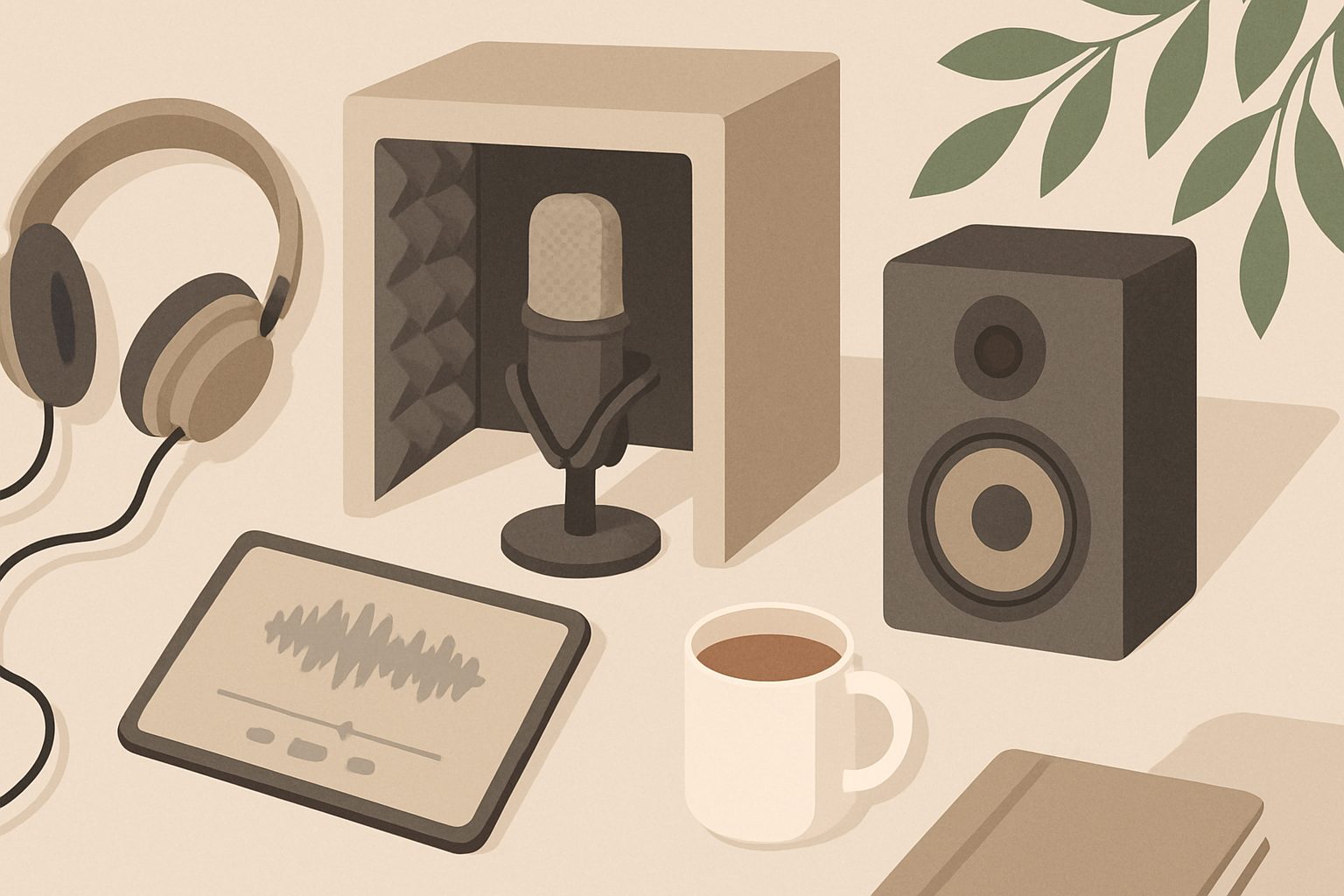
How to Soundproof a Room for Home Recording in the UK: Step-by-Step
If you're recording podcasts, music, voiceovers, or streaming from home, sound leakage and room noise will kill your audio quality. The neighbours' dogs, traffic outside, and your own echo can ruin otherwise perfect takes. The good news is you don't need a professional studio to get broadcast-quality sound—proper soundproofing and acoustic treatment are within reach for most home recording setups.
This guide walks through practical, budget-conscious methods to quiet a room using materials readily available in the UK.
Understanding the Difference: Soundproofing vs. Acoustic Treatment
Before spending money, understand what you're actually solving for.
Soundproofing stops external noise from entering your room and prevents sound escaping to neighbours. It requires mass and isolation—think mass-loaded vinyl and sealed doors.
Acoustic treatment controls reflections and reverb inside the room. It uses soft, porous materials like foam panels and bass traps to absorb sound energy.
Most home recording setups need both. You'll soundproof first to block outside noise, then add acoustic panels to clean up the sound within your space.
Step 1: Seal Air Gaps and Doors
Sound travels through the smallest openings. If cold air leaks in around your door, so does noise.
Start with your door—it's usually the weakest point. Gaps at the top, sides, and bottom are significant culprits. Use self-adhesive weatherstripping tape around the door frame. For the bottom gap, fit a door bottom seal or sweep. These cost £5–15 and make a real difference.
Windows are next. Heavy curtains help absorb some sound but won't stop much. If you have single-pane windows, consider acoustic window film or heavy blackout curtains as a budget option. Double-glazed windows are better but require replacement.
Check for other air leaks: wall sockets, light switches, and cable runs. Small foam seals are cheap and worth plugging.
Step 2: Add Mass with Mass-Loaded Vinyl
Mass is your biggest ally against low-frequency noise (traffic, bass, neighbour voices). Mass-loaded vinyl (MLV) is a dense, rubber-backed material you hang or layer on walls. It's not glamorous, but it works.
Hang it on the wall where outside noise enters most—typically the wall facing the street. Fix it with battens or adhesive strips, making sure to cover the full wall rather than leaving gaps at edges. Seams and overlaps matter; tape them with foil tape to prevent sound bridging the gap.
MLV runs around £2–4 per square metre in the UK, so a standard bedroom wall (say, 3m × 2.5m) costs roughly £15–30 in material. Labour is just your time with a staple gun or adhesive.
A realistic expectation: mass-loaded vinyl reduces mid and high frequencies noticeably, but low-frequency rumble still penetrates. It's effective as part of a layered approach, not a silver bullet.
Step 3: Install Acoustic Panels
Acoustic foam panels absorb sound energy inside the room, reducing echo and reverb. They're not soundproofing—they won't stop outside noise—but they're essential for clean recordings.
Position panels on the walls where sound bounces most. For a typical small room, start with:
- One panel on the wall behind your mic (stops reflections going into the microphone)
- Two panels on side walls at ear level
- One or two ceiling panels above your recording position
- Bass traps in room corners (low frequencies accumulate there)
Panels come in various thicknesses (25mm to 100mm). Thicker panels absorb lower frequencies better. In the UK, acoustic panels cost £15–40 each depending on quality and thickness.
Skip cheap thin foam—it barely works below 500Hz. Mid-range panels from brands like Acoustical Surfaces or own-brand studio supplies give good value.
Step 4: Treat the Floor
Hard floors (laminate, tiles, concrete) reflect sound and amplify room noise. If your room has a hard floor, add a thick rug or carpet under your recording area. A dense area rug (2m × 3m) costs £30–80 and noticeably improves acoustics.
Alternatively, lay acoustic underlayment beneath existing carpet for deeper bass absorption.
Step 5: Consider Your Microphone Placement
A directional microphone (cardioid pattern) rejects off-axis noise better than an omnidirectional mic. Position the mic close to your mouth or sound source and keep it away from reflective surfaces like windows.
A cheap pop filter or wind shield also reduces plosives and room noise pickup.
Realistic Expectations
A properly treated home room won't match a commercial studio, but it's entirely possible to record content that sounds professional. Most successful podcasters and music producers work in treated bedrooms and spare rooms.
You won't eliminate all outside noise—if a heavy lorry passes outside, you'll hear it—but you'll reduce it significantly. Traffic hum, neighbours' voices, and ambient street noise become background rather than intrusive.
For a modest budget (£150–300), you can treat a small room enough for clean voice recording or instrumental music. Expect improvements to be gradual as you add materials; the first few panels and door seals make the biggest difference.
Practical Tips
- Start with the door and air gaps. These cost little and return quick wins.
- Add mass-loaded vinyl to the noisiest wall.
- Layer acoustic panels gradually and listen between additions rather than hanging everything at once.
- Use a smartphone recording app to test before and after; your ears adjust quickly to acoustics, so measurement helps.
- Don't cover every surface with foam. Some reflection is natural and helps the room sound open rather than dead.
Soundproofing a home recording space is a gradual process, not a one-weekend job. Begin with sealing, add mass where needed, then layer acoustic treatment based on what you hear. That systematic approach will get you a genuinely usable recording space without overselling the difficulty or cost.
More options
- Portable Vocal Isolation Tents & Pop-Up Recording Booths (Amazon UK)
- Microphone Reflection Filters & Desktop Isolation Shields (Amazon UK)
- Acoustic Foam Panels & Bass Traps for Home Studios (Amazon UK)
- Freestanding Acoustic Office Pods & Soundproof Cabins (Amazon UK)
- Mass Loaded Vinyl & Soundproofing Barriers (Amazon UK)