Portable Vocal Booth vs Freestanding Studio Pod: Which Should You Buy?
If you're serious about recording vocals at home—whether you're a podcaster, voiceover artist, or musician—soundproofing matters. But the market offers two distinctly different solutions: portable vocal booths and freestanding studio pods. They solve the same problem in fundamentally different ways, and the right choice depends on your budget, space, and workflow.
The Core Difference
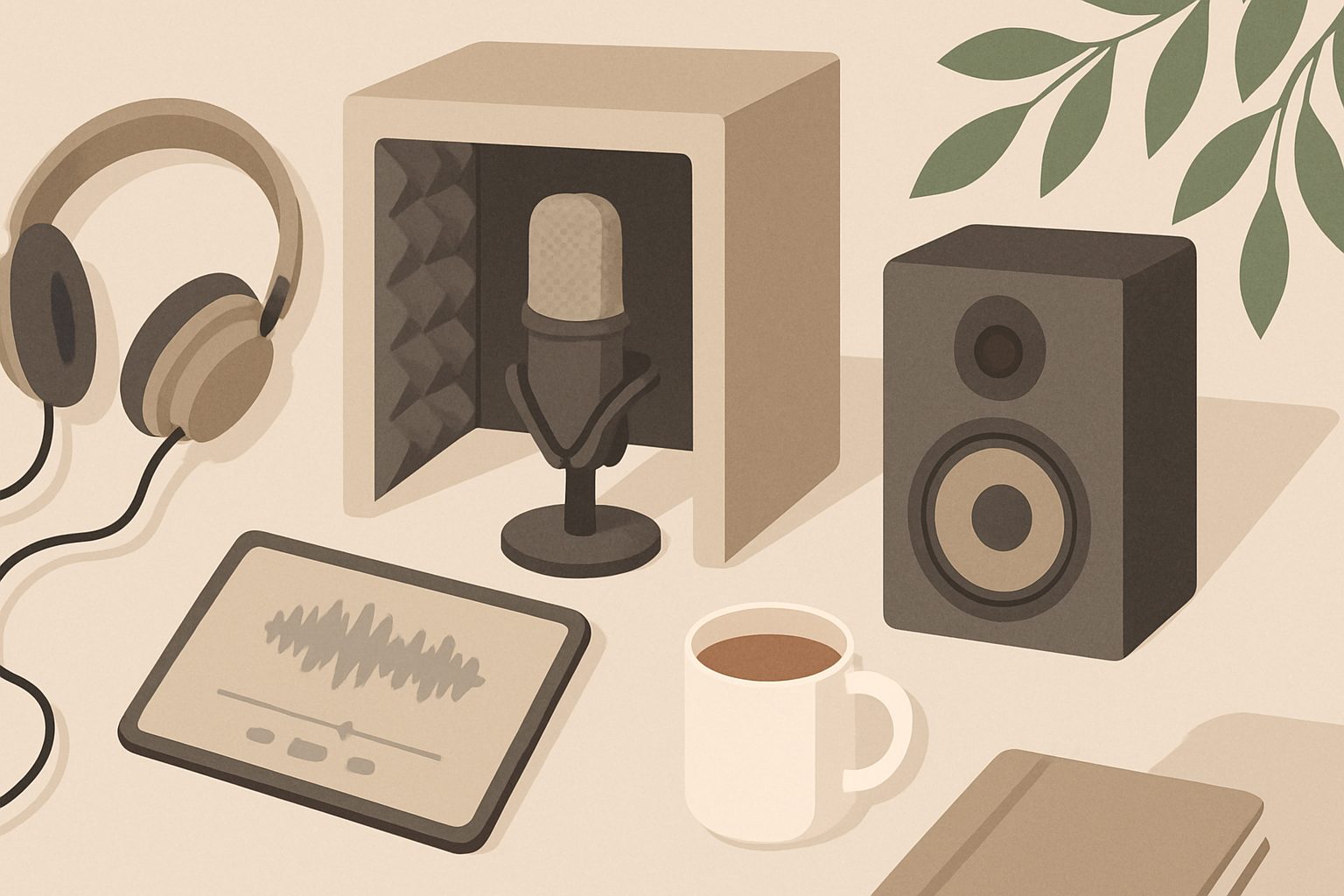
A portable vocal booth is a compact, typically fabric-covered enclosure designed to fit around your microphone and upper body. It isolates your voice from room reflections and background noise by creating a small dead space. Think of it as sound-dampening clothing for your recording setup.
A freestanding studio pod is a prefabricated isolation chamber—essentially a small room. You sit inside it at a desk, closer to a conventional studio experience. It offers full-body isolation and the psychological comfort of a dedicated recording space.
The distinction matters because they address different recording environments and user preferences.
Portable Vocal Booths: Compact and Budget-Friendly
Portable booths work well if you're recording in an already-quiet room and mainly want to reduce reflections bouncing off walls behind your microphone. They're ideal for:
- Podcasters and streamers who need quick, easy setup
- Voiceover artists recording in small spaces
- Musicians recording in treated home studios where room reflections are already managed
- Anyone with limited budget or floor space
The practical advantage: You can position one around your mic, record, then pack it away. They're lightweight enough to move between rooms or take to different locations. Most cost between £80–250.
The catch is straightforward: a portable booth only treats the air immediately around your microphone. It won't reduce sound bleeding in from traffic, neighbours, or appliances. It won't fix a naturally boomy room. If your recording environment is noisy or acoustically untreated, a booth becomes a band-aid solution.
What to expect at each price tier:
Budget (£80–130) – Basic fabric designs that absorb some high-frequency reflection. Minimal build quality; often flimsy stands or velcro attachment to microphone arms. Effective for content creation if your room is already quiet.
Mid-range (£130–200) – Better absorption materials, sturdier frames, acoustic foam panels inside. Noticeable improvement over budget models when properly positioned.
Premium (£200+) – High-density foam, aluminium frames, better sealing. Marginal gains compared to mid-range unless you're doing professional voiceover work where every dB of isolation counts.
Freestanding Studio Pods: Investment in Dedicated Space
Studio pods are different propositions. They're self-contained isolation chambers, typically ranging from 70cm to 120cm wide, with walls lined with acoustic foam or specialist absorption material. You sit inside at a desk, and the pod becomes your recording space.
Studio pods are the better choice if:
- You record frequently and want a consistent, isolated environment
- Your home has background noise you can't control (traffic, family, pets)
- You need professional audio quality for voiceover, podcast production, or music
- You have the floor space and budget to justify the investment
- You want the psychological separation of a dedicated recording room
The advantage is substantial isolation. A well-designed pod reduces ambient noise by 20–30dB or more, meaning you can record clean audio even in noisy environments. You're not working around your room's acoustic problems—you're eliminated them.
The trade-off is commitment. Pods aren't quick to set up or break down. They occupy permanent floor space. And they're expensive: entry-level options start around £1,500–2,000, with professional-grade pods reaching £4,000–8,000+.
What to expect at each tier:
Entry-level (£1,500–2,500) – Functional isolation, basic aesthetic. Companies like Studiobricks or Whisper Room offer portable pod designs with modular assembly. Adequate for most home recording scenarios.
Mid-range (£2,500–4,000) – Better absorption, quieter ventilation (important for longer sessions), improved comfort inside. Meaningful step up in isolation performance and build quality.
Professional (£4,000+) – Heavy-duty construction, advanced acoustic design, superior HVAC systems. Primarily for commercial studios or serious professionals.
Making Your Decision
Ask yourself three questions:
Is your recording environment already quiet? If yes, a portable booth may be sufficient. If you live near traffic, have noisy housemates, or pets, a pod becomes essential.
How often do you record? Occasional use (once or twice weekly) can work with a booth. Daily recording or professional commitments justify a pod's investment.
What's your budget? If you can't stretch to £1,500–2,000, a quality portable booth is a legitimate choice. There's no shame in a lower-cost solution that fits your needs. But if you can afford a pod, it will transform your recording experience compared to a booth.
The Hybrid Approach
Worth noting: some professionals use both. A portable booth for field recording or travel, combined with a studio pod at home. A booth doesn't have to be a permanent solution—it can be a stepping stone to eventual pod ownership, or a companion tool for specific use cases.
The real issue is treating a portable booth as a substitute for acoustic treatment when your environment demands a pod. They're different tools. A booth won't rescue you from a noisy room, but it will improve your recordings in an already-treated space. A pod solves isolation problems at the source.
Your choice ultimately comes down to honesty about your environment and how seriously you're investing in your recording practice. Both solutions work—they just work in different contexts.
More options
- Portable Vocal Isolation Tents & Pop-Up Recording Booths (Amazon UK)
- Microphone Reflection Filters & Desktop Isolation Shields (Amazon UK)
- Acoustic Foam Panels & Bass Traps for Home Studios (Amazon UK)
- Freestanding Acoustic Office Pods & Soundproof Cabins (Amazon UK)
- Mass Loaded Vinyl & Soundproofing Barriers (Amazon UK)